The CRHE or Coalition for Responsible Home Education has pushed for April 30th to be “Day of the Homeschooled Child.” They have asked for stories that wouldn’t be traditionally told by homeschool alumni.
“Some homeschooled children grow up in families that exploit lax homeschool laws to isolate, neglect, and abuse them. Hidden away from any person or system that could help, these children are forced to deal with big problems all alone, like educational neglect, physical and mental health issues, and violence.”
https://responsiblehomeschooling.org/day-of-the-homeschooled-child/
As this is a post about such topics, I want to give a content warning for abuse, sexual abuse, suicide, and depression.
I struggle to put into words my feelings around homeschooling. In many ways homeschool alumni are instructed to offer their parents grace and respect on the choices that their parents made regarding their education. A very general idea is “they tried their best” and to forgive and SILENTLY move on about the ways that they did fail. Also, speaking out about problems with homeschooling especially in a conservative family can alienate you from that family.
But I’ve been reflecting on my own childhood recently; and if I’m being honest, I struggle to keep it positive all the time. In my last post about homeschooling, I tried to speak to broad dangers and problems with the textbooks. But that very much erases the individual stories and lives of homeschool children.
I was isolated while I was homeschooled. I know my parents made an effort to socialize us. But in many ways those efforts fell flat. My mom was raising six children (dad was very busy at work almost every day) and she didn’t have the time or energy to take all of us to see our friends. So instead, we had to settle for biweekly or monthly (in my teen years) visits with those in our age demographic. With good Christian homeschool kids of course don’t go thinking we were crazy and hung out with secular public-school kids. This socialization would mostly happen while our parents were also accomplishing other things like taking younger siblings to music lessons. Socializing without any attempt to be productive or learn something would have been unheard of. 1
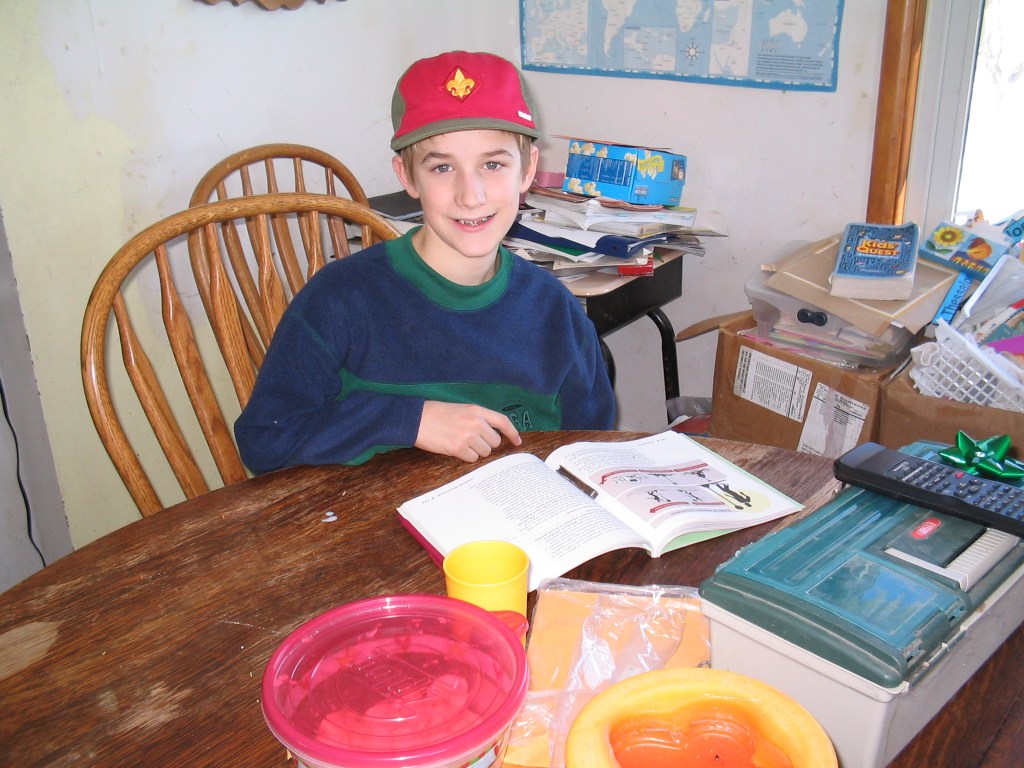
My parents did enroll me in boy scouts, and I did attend on a weekly basis. But weekly engagement with your peers sitting down for an hour of discussion around nature, camping, knots, and merit badges is not enough to allow for true connection. Especially when those same peers attend school together and already have tight cliques. I struggled to find ways to interact with kids that had culture and experiences completely foreign to me.
While I was thinking about stories from adventures in odyssey and patch the pirate, my peers were discussing some girl named Jessica Simpson. “Who? Oh, is she from the Simpson’s TV show?” Not that I had ever watched a single episode of The Simpsons. According to my parents the Simpson (from the TV show) were a classic case of everything wrong with America.

I have a very vivid memory of talking to someone in my youth group (I would have been in 3-4th grade) and being totally unaware that video games and especially handheld video games existed (This was the early 2000s for context). My world was much smaller than those around me. Outside culture such as TV, Movies, and Video games did not exist in my small little world. They were worldly influences that had to be kept out. The media that was allowed in my life was there to teach me fundie doctrine, morality, or scripture.
While much of that type of isolation from culture can be overcome, I think the harder part of all of this was the isolation from conversations around emotions, mental health, consent, and sex. I also had few people I could reach out to or trust in my life. My parents were supposed to be the ones I would reach out to. This family format was laid out by influential parenting “experts” like Gary Ezzo and Dobson. Isolation from outside points of view about mental health and difference in religious view was a perk of homeschooling not a downside (at least in my parent’s minds).

I didn’t grow up hearing how we need to talk about our mental health problems. Or learn coping skills to handle my anxiety and depression. One of the first lessons I consciously remember receiving was this abeka bible lesson about amber lamb. I will sum it up as “We don’t need to be afraid because Jesus is always there beside us.” While that message can be innocuous if that is the ONLY message you receive around anxiety it leaves you with very few coping skills.
In my teens I struggled with depression, but I wasn’t even given the language to be able to voice that. I just knew I really didn’t want to exist on this earth anymore, and that I was sad all the time. Most of my teen concepts around depression was from novels I had read or from scripture and sermons. By the time I was in my teens I was truly emotionally isolated, and I didn’t have a close friend that I could share my true emotions and struggles with. Between the struggles of my mom to have the energy get us out and socialized and moving between churches, I was left without any close friendships. Don’t get me wrong I visited a couple of houses (a couple times a year), but I didn’t have a trusted connection with anyone my age.
Nor did I have a connection with a trusted adult. Something my daughter has been learning in 2nd grade. That you need to find an adult that you can trust and will protect you and keep you safe. The idea is that a child knows they can trust this person; and the adult will keep them safe if the child is threatened, feels unsafe, or abused in any way.
My point is I had no one except my parents to reach out to when I was at my lowest. And in many ways, they let me down. When I was confronted about my depression, I had stopped eating before my parents noticed or commented on it. My obsessive thoughts around shame and guilt about my sinful and wicked self was confirmed by my parents. I was told, yes, you are sinful and you need to give that over to god and ask for forgiveness. My thoughts of melancholy my mom reassured me were a part of life. Never mind that this was a time of true suicidal ideation in my life. My parents never bothered to ask if I wanted to kill myself or not. My mom stated she routinely dealt with depression. Her offered solution for my depression was prayer and reflection on scripture. David (The biblical figure) was also mentioned in the conversation as having struggled with mournful and sad thoughts so “read some psalms and pray” was what this advice boiled down to.
In all reality, I was left alone to navigate my mental health. I had to cope with my intrusive thoughts of harm to others and self. I had to find was to survive my suicidal thoughts, alone very truly alone. And, yes, I’m here; and I would say overall I’m doing better now. But that is in spite of my upbringing rather than because if it. I’ll openly admit homeschooling wasn’t the only factor in my story, but homeschooling was used as a tool to help cause intentional isolation and indoctrination of their child.
It also left me very vulnerable to abuse. My naivety allowing for some instances of sexual abuse in my teens and college life. I had no idea what normal physical contact with another person looked like, and where the line is for abuse and inappropriate contact. Allowing for some of my boundaries to be crossed while I worked at a summer camp in my teens. I’ve also discussed my sexual relationship with my partner in college before on this site. And even that I would have to now classify as sexual abuse. Manipulating someone into sex through a threat is abuse. Something I didn’t know or have words for due to my lack of education around sex, sexual abuse, and consent. I was set up for failure by my parent’s silence around the topic of sex and consent. All while they intentionally isolated me from any type of outside conversation around sex (in all media forms).
Both me and my partner have had to work through the ramifications and loss of trust around those things. Please keep in mind my partner was sexually abused in her teens and she was repeating cycles of manipulation and abuse that were done to her. Both of us were failed by our parents; and harmed by the isolation or lack of knowledge around sex, sexual abuse, and consent that we were raised in.
I didn’t write this piece to try and offer grand solutions, but as a way to advocate for the day of the homeschool child. And as a way to bring awareness to the isolation and abuse that some homeschool children face. Please go give CRHE a follow on IG or twitter or check out their website.
- One of my closest friends wasn’t allowed to attend these monthly homeschool get togethers because their parents felt that it was unproductive, and children weren’t learning anything. The homeschool group that was based around these meeting did have “talent show” style (poem reciting, music, or science fair discussions) presentations every meeting; but that wasn’t enough for his parents to be drawn to it. Gathering for socialization was not a valid reason to get together as homeschoolers. ↩︎


 Freedom From Fundamentalism
Leave a reply to Highs (and Lows) of High School Ages 15-18 (Part 5) – Freedom From Fundamentalism Cancel reply