After college we quickly moved from an independent baptist church1 to a separate conservative religious movement – the gospel hall assemblies. I’ve since learned this is an offshoot of the Plymouth brethren2 (John Nelson Darby and George Muller were famous members). We were desperate for friendship and community and needed a place to belong in, or at least a church community that my parents currently weren’t attending. Some of my childhood friends were currently attending a local gospel hall at the time and encouraged us to check it out.
It was a similar situation as PCC. They were strict but claimed to have biblical answers for their conservative views. And their community did show a true sense of communal sharing that was completely foreign to me at the time; opening their homes to other church members in need or just if they needed a place to stay while they were in the area.3 We attended a gospel hall conference and listened to a few dry old men and a couple very moderate leaning driven speakers.4 One of these speakers really had a passion for education regarding mental health and that really captured my attention. He also spoke about sexual abuse and how the gospel hall movement could work to combat it in their communities.
I think one of the reasons why this (cult) religious group didn’t raise red flags was that at least two of the religious homeschool families I grew up with attended gospel halls. Also my parents would let my sister attend their conferences with her childhood friend; with my mom and sister attending the same friend’s baptism at this faith community. Remarking on the gospel hall’s differing takes on music, but how it was a beautiful sound to behold. Religious authority in my life vaguely pointed towards them as a safe (but a little strict) religious group.5
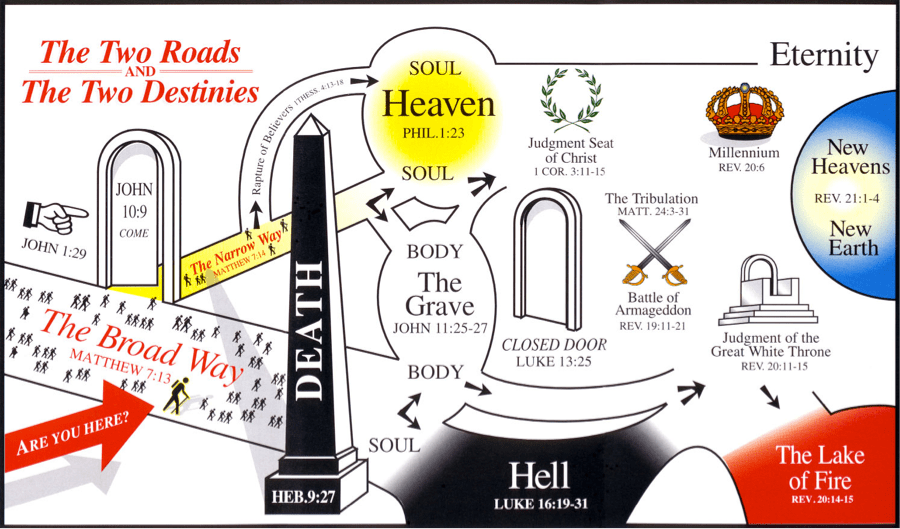
To make a long story short, we quickly learned that if we ever wanted to find a place in this community we would need to vow to commit to and believe the community’s doctrine and beliefs. Without this stated commitment we would never be allowed to participate in communion, teach children’s church, or even really participate in Sunday school.
Everything in this community was reserved for male members of the community. With women within the community expected to wear head coverings in the church as a symbol of their subservience beneath god and their husbands. A view that some of the members of the Baptist church I grew up in had also expressed.
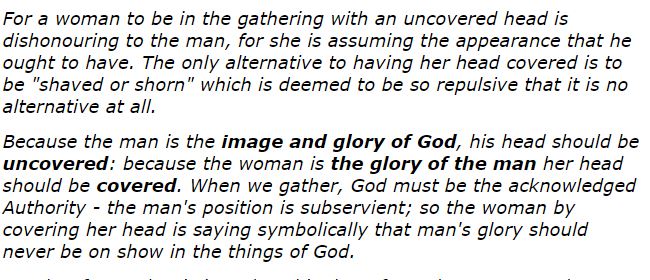
1 Timothy 2:11-12 “Let the woman learn in silence with all subjection. But I suffer not a woman to teach, nor to usurp authority over the man, but to be in silence.”
They also hold a very literal view of 1st Timothy 2: 11-12. And actively enforce it in their churches. Women are allowed to sing and possibly teach Sunday school to children but nothing further. During congregation wide communion (which encouraged pop up style involvement sharing of prayer, scripture, song, or testimonial around the sacrament) men were encouraged to participate but women were to remain silent. Adult Sunday school was similar and involved the reading of scripture. Individuals would then share their personal interpretation or understating from the scripture passage; but women were unable to participate. Members of the church take turns giving Sunday teachings or sermons, but once again female members are not welcome to teach.


All of these sexist teachings were gently supported and taught throughout my life. By PCC – see the article I wrote about purity culture and how PCC taught around that subject. By my parents – they taught this to me as a child, and they had been instructed in the same way at New Tribes Bible Institute (Now Ethnos 360) and their church on gender roles in the church and home. (The link in this text will take you to a post centered around “biblical Womanhood” and a sermon on the topic that my mom recorded during her time at college.) And by my friends – my closest childhood friend grew up in an environment where his mom and grandma wore head coverings.6
We really tried to fit in and find a place in this community. But over the course of a it became evident that we were never going to be welcome if we weren’t willing to fit into the doctrine completely. We were always going to be treated as second class to the long term fully committed and vetted “fellowshipping” members of the gospel hall. And while, yes, were never harmed as much as our time at PCC it was still a dive back into harmful theology for both of us. I was hearing messages on man’s roles in the home (spiritual leadership of course), and my partner was getting a lot of messaging around how she needed to stay submissive to me and to the church. Symbols of submission to male leadership were in place any time we were in a place of worship – head coverings and the complete silence of women.
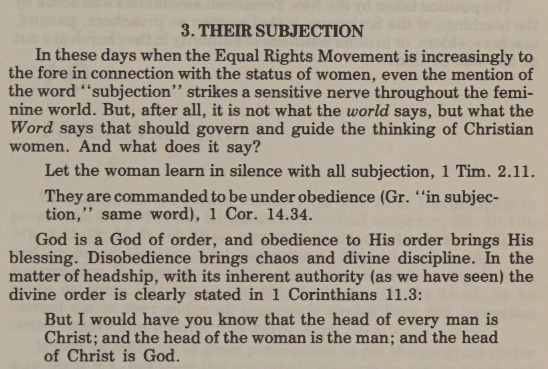
by Mackay, Harold
We were also struggling with how the gospel hall treated kids. We tried hard to keep our daughter still and quite during the service and Sunday school. But our daughter has ADHD and getting her to sit still for 2hrs was almost impossible. Children were encouraged to attend and listen silently throughout the service. This was done by omittance (there was no Sunday school breakout for kids), or at conferences by speakers that would very loudly shame children for being absent or inattentive. Children being forced to sit still for multiple hours for a message that goes way over their head is not productive in any way. And normally ends with the parents being shamed for not raising submissive and obedience children, and the children being scolded or disciplined until they comply and sit obediently.
Despite Hillside Gospel Hall‘s7 theology around not being led by a pastor but by many godly men in the congregation it was very clear that there was only room for one voice of leadership in the gospel hall. One of the elder’s dominated over any discussion around theology or scripture and would shut down anyone that disagreed with them. This elder also was the individual that ran Sunday school and chose who would be speaking each Sunday. To seek out “fellowship”8 or inclusion in worship at Hillside would require the approval of this one individual.
My partner pointed out that I excluded their views on music and worship, so I’ve gone back and added this in. Hymns and songs were only pulled from the Believers Hymn Book. And all hymns were to be sung acapella no musical accompaniment would be allowed. Many of the traditional hymns used in other denominations are excluded from their hymn books. There was also not a singular person leading or conducting the congregation. Men would stand up and suggest which hymns should be sung before the start of a sermon with everyone joining in slowly as the congregation found a rhythm. This also was very clearly not a women’s role. With it being very iffy, if women speak up and suggest the hymns that the congregation would sing. It was clear that women could suggest children’s songs during a designated children’s song time portion of the service, but after the children were done social pressure seemed to suggest that women were not welcome to suggest which hymns should be sung.
Overall, it was a very unhealthy environment and I’m glad we found our way out of it. Both me and my wife were struggling as we exited college, and this wasn’t something that should have ever belonged in our lives. My wife had multiple panic attacks while at some of the gospel hall conferences and that alone should have been the end of our time there (listen to your body folks). A faith community should be a place that everyone feels safe and included in, and not an institution devoted to keep women silent and submissive.
I’m trying to tie together these three posts about my life and how authoritarian teaching influenced my point of view and my actions around the start of my adult life. And I hope that my theme was clear throughout my series. This theme was that my upbringing supported and encouraged me to trust unhealthy authoritarian communities. This happened due to both internalized theology and from endorsement of these communities by influential (to me) faith leaders and family. And these authoritarian communities caused a lot harm to me and to my relationships with others. Thank you for following me on this journey.
- This was the church my family attended in my teen years, and my family still attends to this day. If you need some idea of what the leadership of that institution looks like see my two posts discussing him. My letter regarding his public position on book banning and my discussion about the border and politics with him and his wife. I think me and *redacted* both just needed some space from my family and that particular church. ↩︎
- https://diaryofabrethrenboy.wordpress.com/ (Blog of a gay ex-brethren church member from New Zeeland if you want to read more about Plymouth brethren churches). ↩︎
- Looking back now this was very exclusionary and was something that was offered to church members. I can’t recall anyone offering housing to someone that was outside of their faith community. ↩︎
- We quickly learned this was very much an abnormality, and this style of well-rounded moderate speakers were not in the majority. I never heard a speaker from the gospel hall movement again speak on mental health issues or sexual abuse in the church after this conference. ↩︎
- I’ve also learned that my parents wanted to attend a gospel hall while they were in missionary training in Canada. But they were assigned to work with a different church denomination. They also had close relationships with several members of the gospel hall while they were in missionary training. ↩︎
- He actually ended up marrying a girl he met while attending a gospel hall conference in Iowa. ↩︎
- I’m feeling very much in the mood to name harmful organizations by name. I know it wasn’t named throughout the post. But I would feel like something is amiss if I didn’t add it somewhere. ↩︎
- The gospel hall shies away from using the words – member and church as descriptors. ↩︎


 Freedom From Fundamentalism
Leave a reply to N.J. McConnachie Cancel reply